




-


-


-


Online Message


Buying from an importer's stock or ordering fresh from an ice cream factory: whi
2026-10-30
Share to:


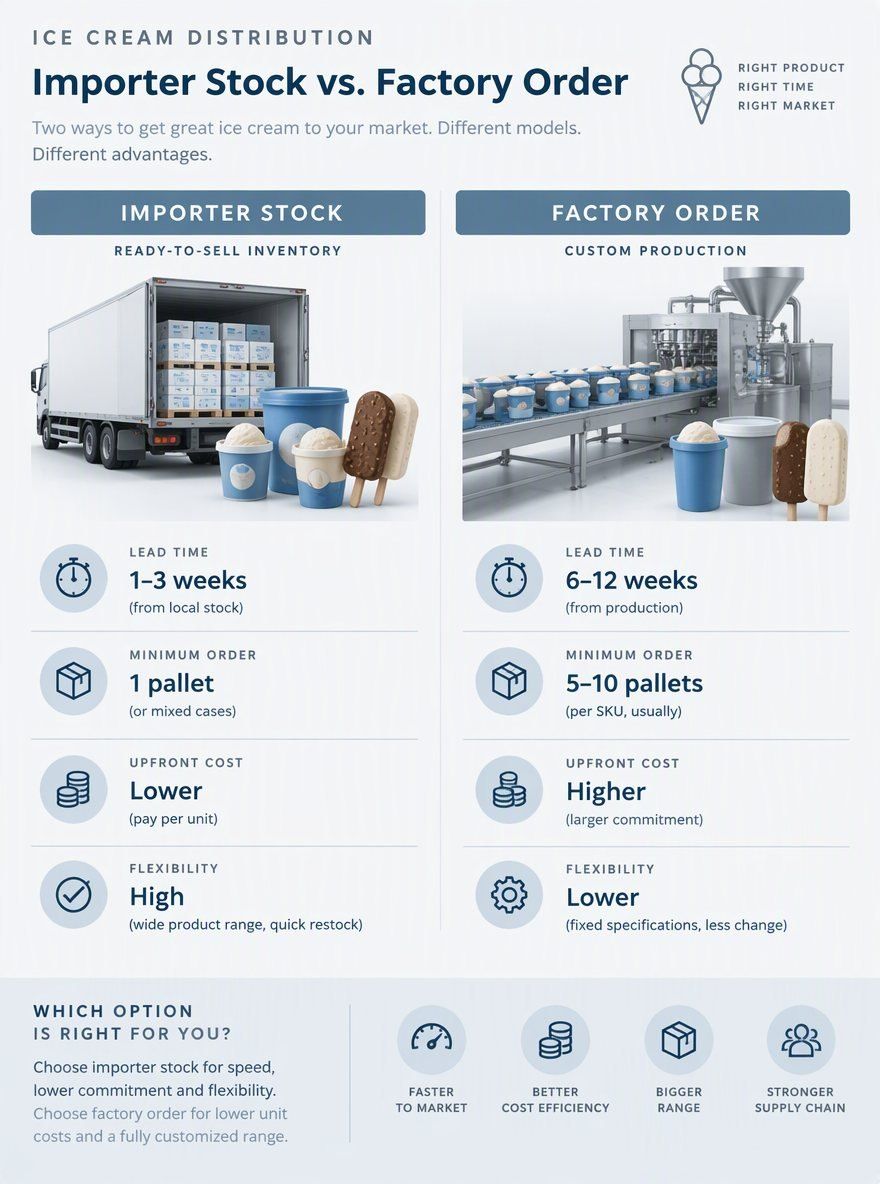
Stock is immediate and comes in small lots; a factory order gives your own packaging and better control of dates. Distributors below container volume usually buy stock, and move to factory orders when regular reorders justify a mixed container.
What are the core differences for a distributor?
For a regional distributor, balancing inventory risk and product freshness is a constant challenge. Choosing between local importer stock and direct factory orders depends primarily on your current order volume, cash flow, and need for custom branding.
Importer stock offers immediate availability and low minimum purchase quantities. This path suits smaller distributors who cannot yet absorb a full container or a mixed container. However, stock from an importer means you accept existing packaging, standard language labels, and whatever shelf life remains after ocean transit and customs clearance.
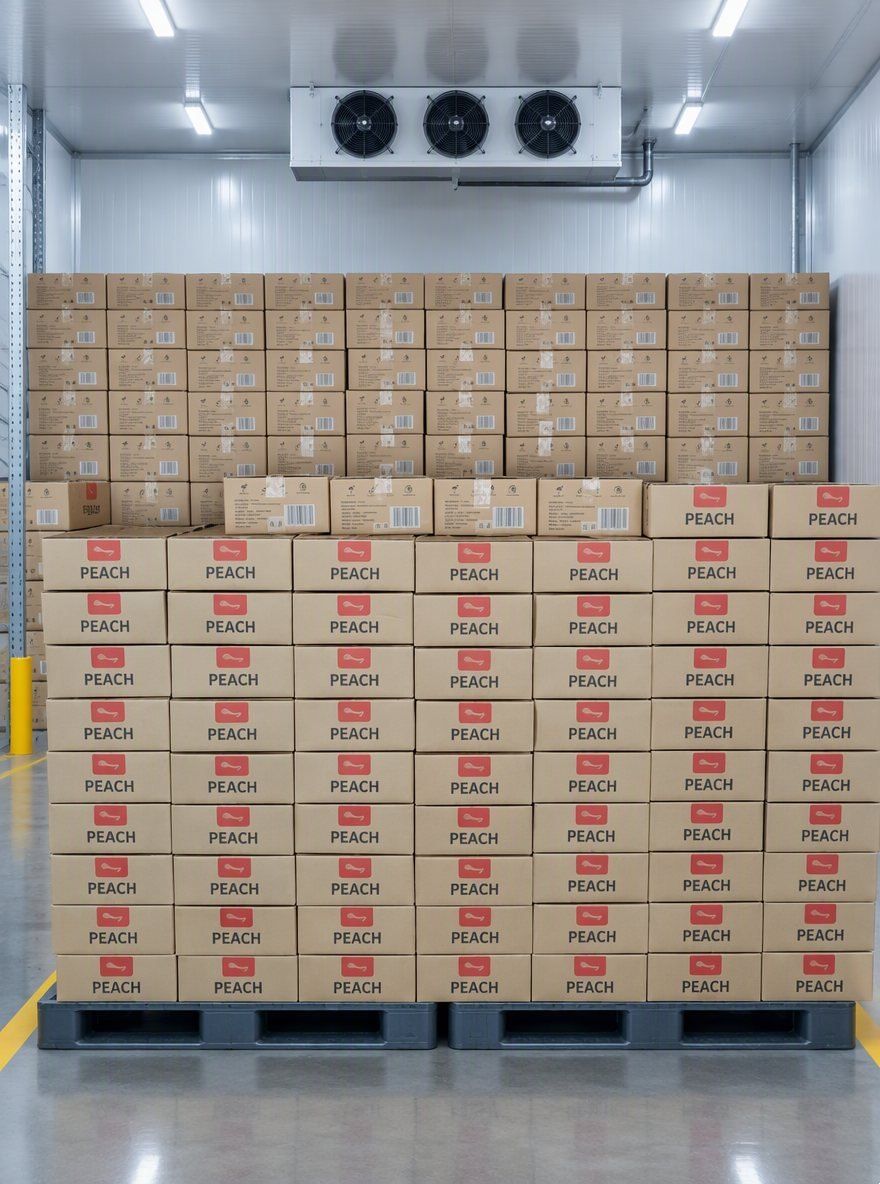
A factory order, conversely, provides fresh production dates and allows private-label or custom packaging options. According to industry logistics standards, direct factory orders give you full control over shelf-life margins and packaging specifications, which is essential for scaling a proprietary brand.
When should you buy from importer stock?
Buying from an importer's local inventory makes sense under specific business conditions:
- Below container volume: If your seasonal or initial order does not meet the minimum box requirements for a mixed container, waiting for a factory run is inefficient.
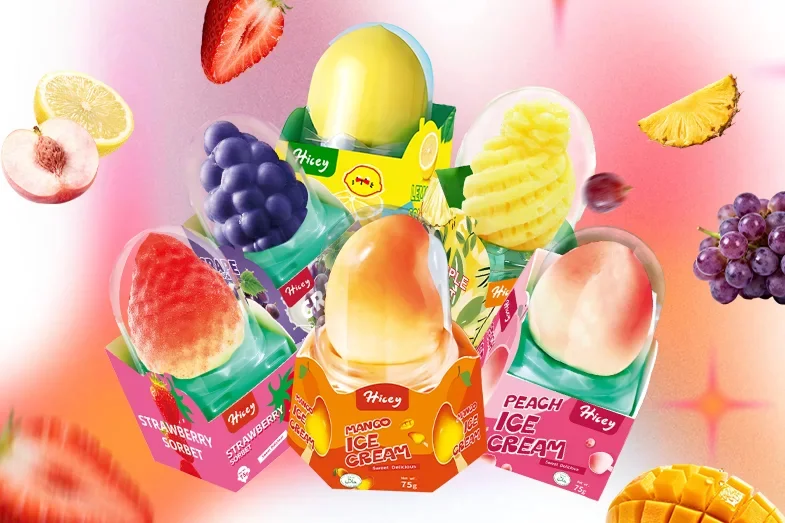
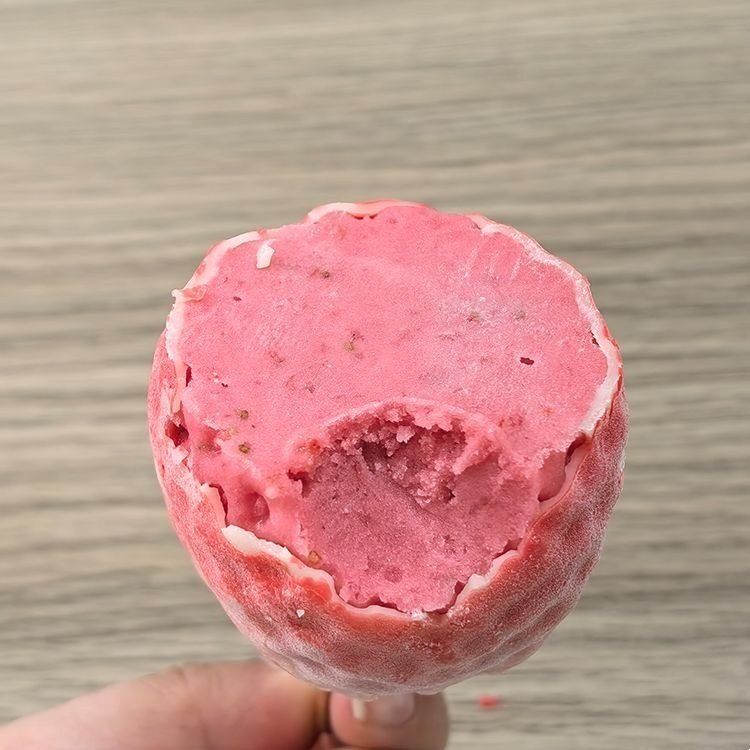
- Urgent market testing: When testing a new novelty line or fruit-shaped ice cream SKU, local stock lets you gauge sell-through rates without tying up capital in sea freight and customs lead times.
- Low initial capital risk: Importer stock minimizes upfront financial commitment, though unit costs may be slightly higher due to distributor margins.
When should you move to a factory order?
As your distribution network expands, relying solely on importer stock creates supply bottlenecks and limits profit margins. You should transition to direct factory orders when:
- Regular reorders stabilize: When your reorder frequency justifies regular shipments, placing a factory order ensures continuous supply without middleman markups.
- Custom branding is required: Private-label packaging, multi-language nutritional panels, or custom barcodes require direct factory engagement, as local importers rarely alter secondary packaging.
- Date control matters: Direct factory orders guarantee that products arrive with maximum remaining shelf life, reducing inventory write-offs caused by near-expiry stock.
FAQ
Should a distributor start with importer stock or a factory order? If your volume is below container minimums, start with importer stock to test the market. Transition to factory orders once stable reorders justify mixed-container logistics.
Does a factory order allow custom packaging? Yes. Direct factory orders support customized secondary packaging and language labels, whereas importer stock is restricted to pre-existing standard cartons.
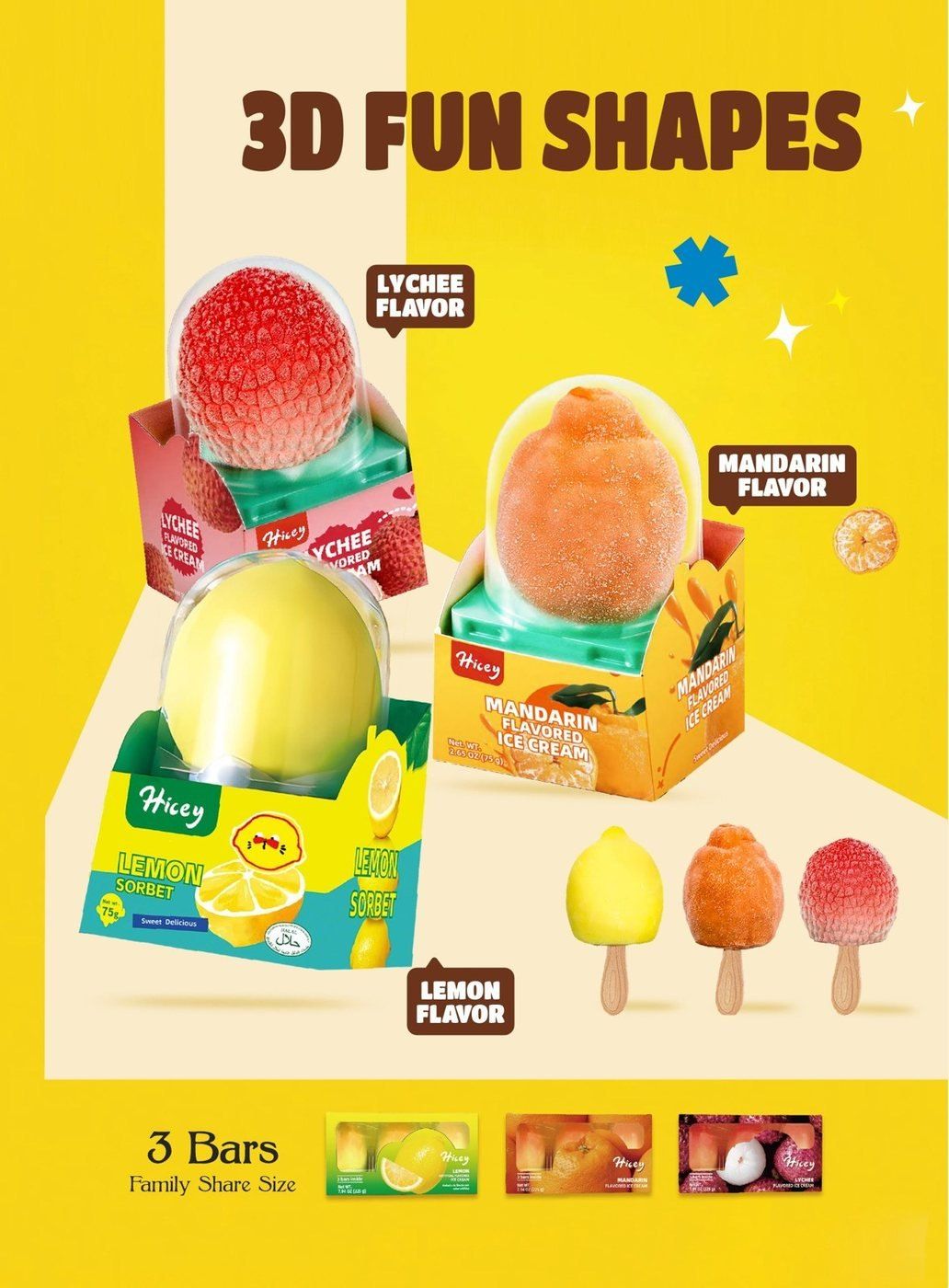
Shared by the cross-border fulfillment team at Hicey, the export brand of Beijing Youshare Food Co., Ltd. We provide 3D molded ice cream solutions with clear operational benchmarks, including an estimated 20-working-day production schedule once orders are confirmed. Inquiries and technical questions are always welcome in the comments.
#distributor #icecreamimport #supplychain #frozenfood #b2btrade
Product super fit, quick contact unlock exclusive program


looking for more infermatien?
Tel+Whatsapp:
Address: Yard 8, Fuze Road ,Fangshan District.Beijing, China
610 Zhonghai International Plaza, LicangDistrict, Qingdao, Shandong, China