






-


-


-


Online Message


What technical factors dictate inclusion and coating feasibility in molded 3D ic
2026-11-24
Share to:


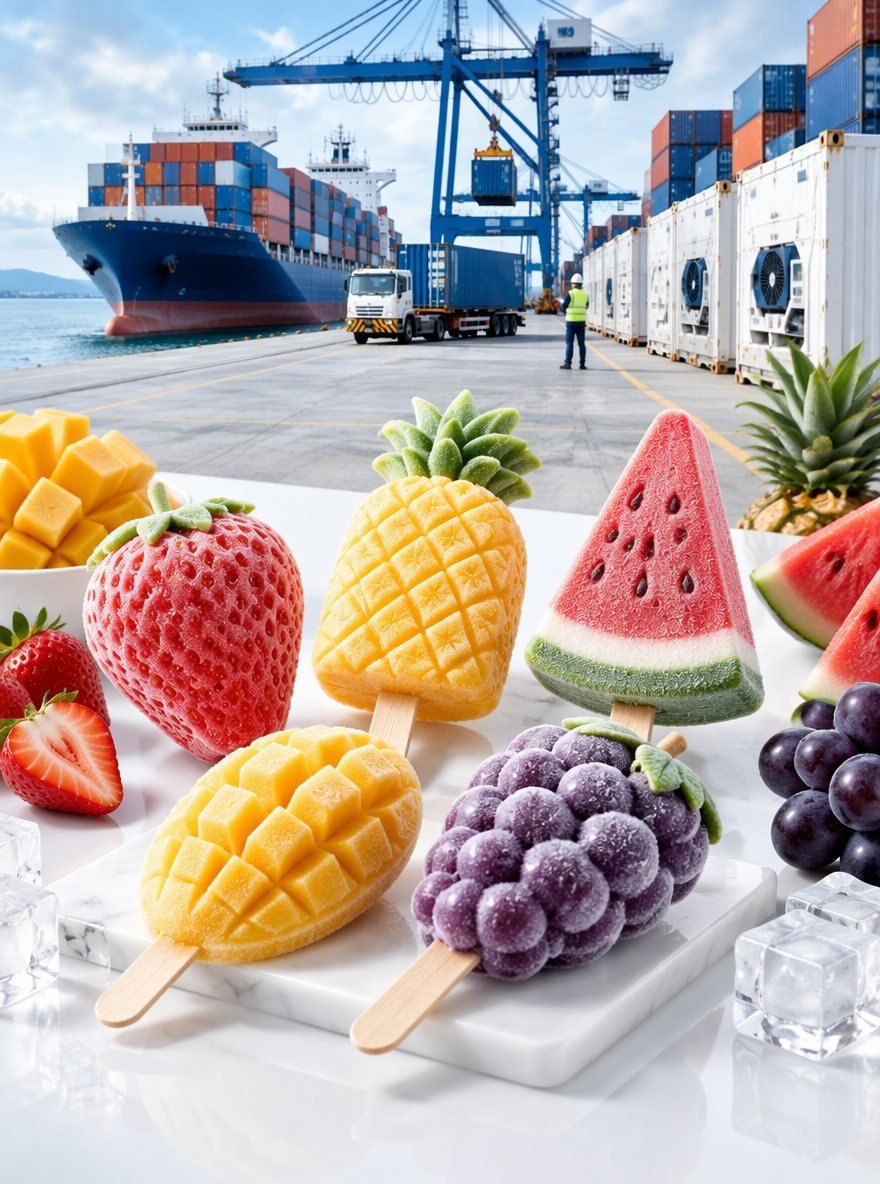
Adding inclusions or external coatings to complex 3D shapes requires balancing particulate sizing with mold draft angles and cryo-hardening temperatures; excessive inclusions can compromise fine surface relief, making specialized coating lines distinct from standalone silicone molding setups. For B2B importers and private-label brand owners evaluating molded 3D ice cream, understanding these physical parameters prevents structural defects during industrial-scale manufacturing.
How do particulate sizing and mold draft angles interact?
Molded 3D ice cream products rely on precise mold cavities and calculated draft angles to achieve clean release. When incorporating solid inclusions like chocolate crisps into the base mix, particulate dimensions must not exceed the critical clearance thresholds of the mold’s narrowest relief features.
Oversized particles disrupt the continuous phase, leading to surface voids or tearing along intricate edges during extraction. Manufacturers must calibrate particle grading so that inclusions remain suspended evenly without clogging dosing nozzles or interfering with the mechanical demolding grip.
What role do cryo-hardening temperatures play in coating success?
Applying external coatings—such as chocolate shells or fruit glazes—onto 3D frozen surfaces demands strict thermal equilibrium. The base shape must undergo deep cryo-hardening to maintain structural rigidity prior to dipping or enrobing.
If the core temperature is insufficiently low, the latent heat from a warm liquid coating will soften the outer surface, resulting in deformation and loss of sharp contours. Conversely, over-chilling can cause thermal shock and cracking in the outer shell. Maintaining optimal immersion times and bath viscosities ensures uniform coating thickness without compromising internal geometry.
Why are specialized coating lines required over basic silicone setups?
Standalone or manual silicone molding setups are generally adequate for basic, homogeneous shapes. However, integrating automated inclusion dosing and high-speed enrobing onto complex 3D lines introduces mechanical challenges that require dedicated industrial infrastructure.
Industrial lines operated by Beijing Youshare Food Co., Ltd. utilize synchronized dosing units and multi-stage temperature control zones. This setup ensures that high-volume production runs of 3D ice cream maintain both internal particulate integrity and flawless external coating distribution, satisfying strict export standards.
FAQ
Can complex 3D ice cream shapes incorporate inclusions like chocolate crisps? Yes, provided the particulate size is strictly graded to prevent blocking narrow mold details and disrupting surface relief during demolding.
How do inclusions and coatings impact demolding yields? Excessive particle concentration or improper coating temperatures increase surface friction and thermal softening, which directly lowers demolding yields and increases structural failure rates.
Written by the Hicey export team at Beijing Youshare Food Co., Ltd. We specialize in cross-border B2B supply of novelty molded ice cream, currently shipping to more than 80 countries and regions with verified deliveries and ongoing partnerships.
#Hicey #3DIceCream #ManufacturingTechnology #SupplyChain #FoodEngineering
Product super fit, quick contact unlock exclusive program


looking for more infermatien?
Tel+Whatsapp:
Address: Yard 8, Fuze Road ,Fangshan District.Beijing, China
610 Zhonghai International Plaza, LicangDistrict, Qingdao, Shandong, China