








-


-


-


Online Message


Importing ice cream or using a domestic co-packer cost structures differ
2026-10-30
Share to:


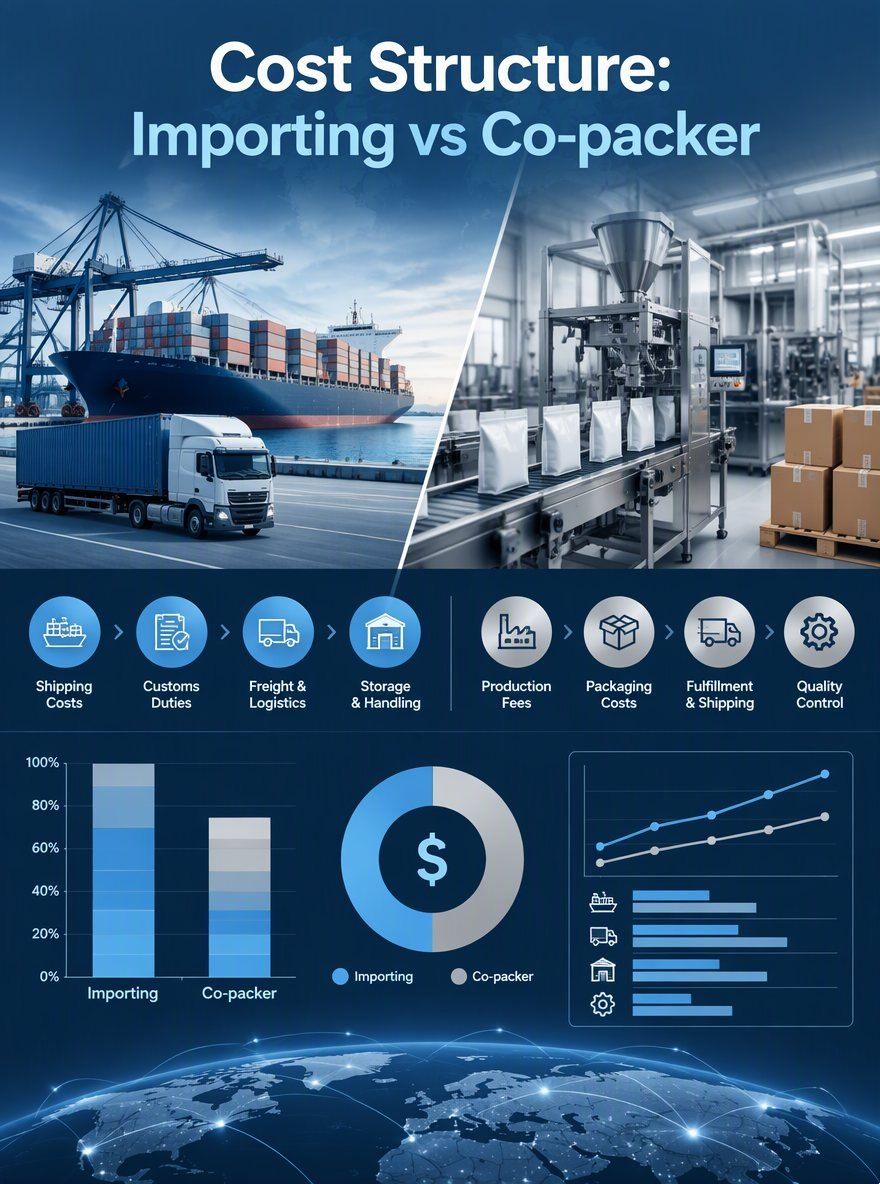
How do importing ice cream and domestic co-packer cost structures differ?
Comparing an imported dessert line to a domestic co-packer requires looking beyond factory quotes. The real financial variance lies in how cost blocks and transit risks accumulate before inventory reaches a sellable carton.
An import splits expenses across three separate parties: the manufacturing factory, the freight forwarder, and customs clearance plus duty. A domestic co-packer generally consolidates production into a single local block. Evaluating these models demands calculating total landed cost rather than initial unit pricing.
What are the core cost blocks of importing?
Importing involves three distinct financial layers managed by separate entities.
The first block is the factory production quote, which covers raw materials, molding, and packaging. The second block is international logistics, including port handling, ocean freight, and reefer container maintenance. The third block consists of destination port customs clearance, import duties, and local compliance verification. Each tier introduces independent billing and coordination overhead.
How does a domestic co-packer structure expenses?
A domestic co-packer typically bundles manufacturing, local warehousing, and initial regional transport into a more unified financial framework.
Because production occurs within the target market, ocean freight and customs tariffs are eliminated. Supply chain administration involves fewer counterparties, reducing the administrative overhead required to monitor shipments across international borders.
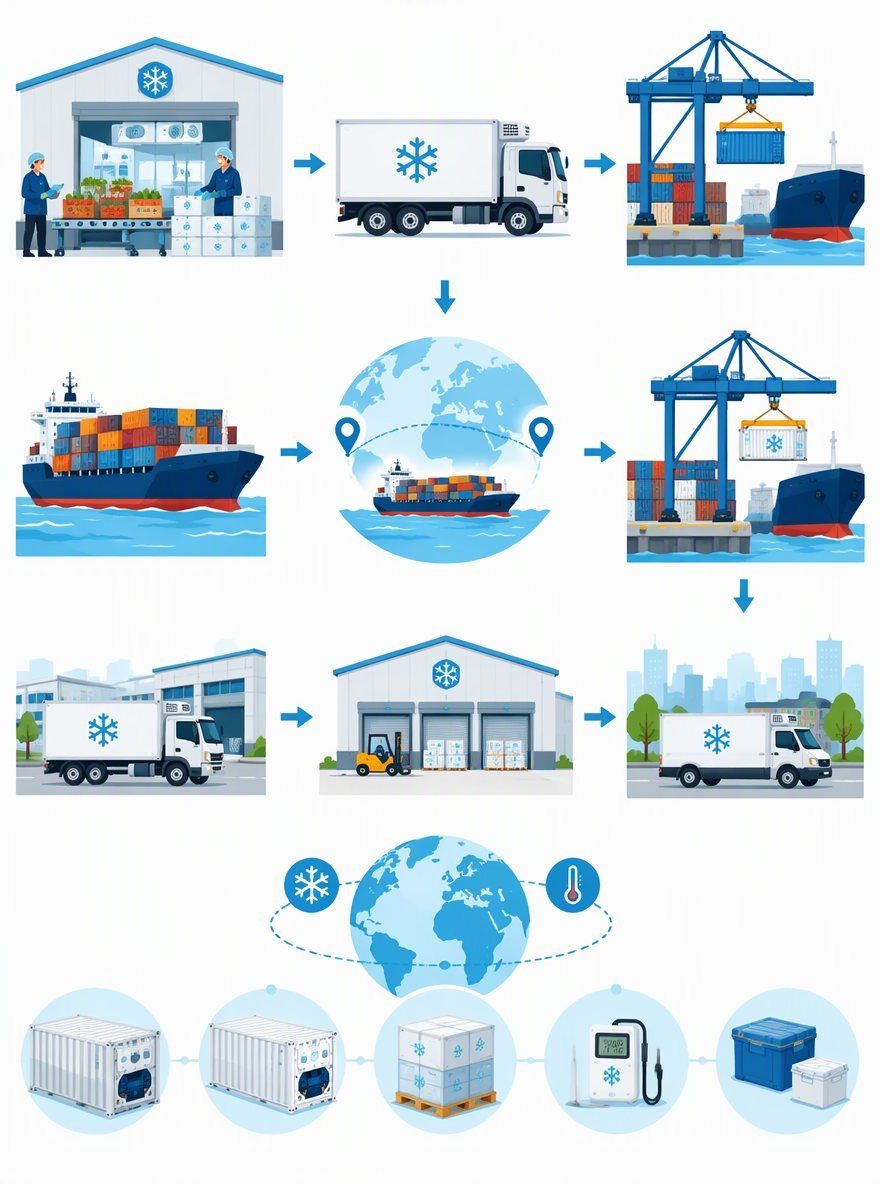
How do transit risks alter the financial comparison?
Reefer transport introduces temperature-sensitive variables that directly impact landed expenses.
An import journey involves longer transit exposures across multiple handling points. If a container suffers temperature fluctuations or port delays, the risk of total loss or product degradation falls upon the buyer's logistics insurance and risk margin. Domestic co-packing shortens transit exposure, lowering the probability of cold-chain failure and minimizing unexpected shrinkage allowances.
Cost Structure Comparison
| Comparison Dimension | Importing Model | Domestic Co-packer Model |
|---|---|---|
| Cost Counterparties | Factory, forwarder, clearance agent (3 blocks) | Single domestic co-packer (1 primary block) |
| Logistics Exposure | International ocean freight and long-haul reefer | Local or regional transport |
| Tariff & Duty | Subject to import duties and customs processing | None (local production) |
| Risk Allowance | Higher transit risk and potential cold-chain exposure | Shorter transit window and controlled local handling |
FAQ
Should evaluation rely strictly on factory unit prices? No. Evaluating solely on factory price ignores logistics tariffs, clearance fees, and transit risk allowances. Landed cost per sellable carton is the accurate metric.
Why is transit exposure critical for frozen desserts? Frozen products cannot recover from temperature abuse. Longer import routes increase exposure to port delays and reefer risks, requiring a realistic loss allowance in financial planning.
Shared by the cross-border fulfillment team at Hicey, the export brand of Beijing Youshare Food Co., Ltd. We provide 3D molded ice cream solutions with clear operational benchmarks, including an estimated 20-working-day production schedule once orders are confirmed. Inquiries and technical questions are always welcome in the comments.
#importing #domestic_copacker #cost_structure #supply_chain
备选标题(按发布位置选用)
- 小红书:Importing ice cream or using a domestic co-packer cost structures differ
- 抖音:How do importing ice cream and domestic co-packer cost structures differ
Product super fit, quick contact unlock exclusive program


looking for more infermatien?
Tel+Whatsapp:
Address: Yard 8, Fuze Road ,Fangshan District.Beijing, China
610 Zhonghai International Plaza, LicangDistrict, Qingdao, Shandong, China